Click the city/area name from MAP or the following list.


Tottori, Tottori sand dunes, Kurayoshi, Misasa
Crashing waves have carved the Uradome coastline into caves and exotic rock formations. Sand from the Sendai river is churned by the sea and then returns to form the famous Tottori Sand Dunes. However, as you approach Kurayoshi in the west by train, the mountains recede in the distance and you can see flat vistas of farmlands wrought from the alluvial soil. Around Lake Togo is a cluster of onsen (hot springs) hotels, with the "Hawai" (not Hawaii!) onsen resort complex in the center.


Matsue, Tamatsukuri Spa, Izumo, Izumo Grand Shrine, Hinomisaki, Yonago, Sakaiminato, Mt.Daisen
Shimane and Tottori prefectures together form an obtuse angle along Japan's San'in coast. Myths that are inextricably woven into the birth of Japanese culture; castle towns that date from the Edo Period; an inland sea and Lake Shinji; Mount Daisen, the Fuji-san of Western JapanÅcthis area, with a mysterious appeal impossible to find in places with large cities, has it all. And getting around is easy. Go north from Yonago through Yumigahama to Sakaiminato using the train, then take a 30-minute bus ride to Matsue.


Iwami-Ginzan Silver mine, Mt.Sanbe, Yunotsu, Hamada
After Matsue the coastal train tracks turn southwest. About 50 minutes away by local express train is the town of Oda, where you can enjoy onsen bathing while listening to the roar of the Sea of Japan and also trek along the tunnels of the Iwami Silver Mines. Back on the express train, another 50 minutes of scenic forest ride later you'll find yourself in Hamada. Here you can stop and take a look at the Iwami Tatami ga Ura, a very unusual rock and fossil formation created by an earthquake in 1872.


Oki
Known for their pristine beauty and breathtaking seaside landscapes, these islands are an absolute must for eco-tourists. There are three ferries that you can take from Matsue, including a high-speed launch called the Rainbow. Or, if you're spending most of your vacation outside of Western Japan, the Oki Islands have several flights that arrive from Tokyo, Osaka and other domestic airports. Either way, access is easier than it might look on a map.


Tsuyama, Katsuyama, Mimasaka, Chizu, Ohara, Hiruzen Heights
Access to this area, located halfway between Okayama City and Tottori City, near the border between their respective prefectures, is easy by either train or highway bus. Tsuyama is not only the hometown of famed swordsman Miyamoto Musashi, but it also has a beautiful river running through it with the ruins of a samurai castle integrated into the city. The surrounding area is noted for its many large waterfalls and opportunities for canoeing down mountain streams. Sportsmen from all over Japan congregate here from Spring to Autumn and stay at the eleven onsen resorts available.


Okayama, Kurashiki, Mt.Washu, Seto Ohashi Bridge, Takahashi, The Kibi Road, Ushimado, Bizen
Okayama - home to Korakuen, one of the three most lovely gardens in Japan. Kurashiki - where you can take a walk along streets preserved from the Edo Period. Bizen and Osafune - repositories of ancient traditional Japanese crafting techniques. All of these can be found in this area, a crossroads of history and culture. At the same time, it serves as an actual crossroads for both train service and highways going to Shikoku and the rest of western Honshu. Warm all year round, this region is known for fruits and seafood and could be called "the Aegean of Japan".


Fukuyama, Tomonoura, Onomichi, Mukaishima, Shimanami SeaRoad, Mihara, Takehara
Along a coast dimpled with inlets and studded with promontories, Fukuyama (Tomo no Ura), Onomichi and Mihara are set in a row. The Kodama shinkansen stops at all of these stations, but in summer or fall you can take a cruise that links Tomo and Onomichi - a much more scenic mode of travel. Weaving between the islands of the Seto Inland Sea is an experience not many will forget. But even if you don't choose shipboard travel you can still appreciate a spectacular view. From the top of either Mt. Senkoji in Onomichi or Mt. Fudekake in Mihara at night,


Miyoshi, Bingo-Shobara
Leaving Hiroshima, the train travels along the Ota River and arrives in Miyoshi in an hour and 20 minutes. In the mornings from Spring to Fall mist hangs over the basin here like a sea. Young travelers coming here have increased lately due to the popular comic "Yuugiri no Miko", which is based on a local ghost story handed down for generations. The next stop is the town of Shobara, located in a mountain range that rises to 1200m (4000ft). At a small station in the mountains, Bingo Ochiai, you transfer to a tram and ride over the treetops to Kisugi station, near Lake Shinjiko.


Hiroshima, Miyajima, Saijyo, Kure, Iwakuni, Yanai
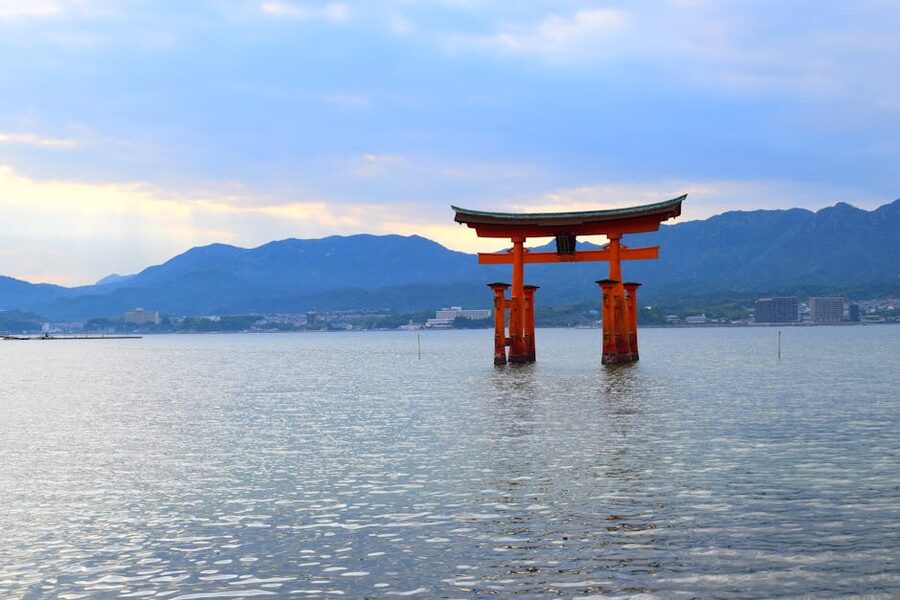
If you stand on the roof of Hiroshima's high building, no matter which way you look you'll see mountains. In the south you can see Miyajima and Etajima, famous for mikan tangerines, among many mountainous islands. The three cities defining Hiroshima Bay - Iwakuni, Hiroshima and Kure - form a long and shallow north-south triangle easily seen on any map. If you were to travel by hydrofoil from Hiroshima port to the island of Shikoku, for example, 10 minutes into the trip you'd be at Kure harbor.


Nagato, Omishima, Hagi, Tsuwano, Masuda
If you ride the local train north from the Shin Yamaguchi shinkansen station (on weekends this will be the rustic Steam Locomotive) it will take you to Tsuwano. This small castle town, nestled in a valley only 350 meters wide, affords a leisurely opportunity to observe Edo Period lifestyle and buildings. Then you can take a bus over the mountains to Hagi. From there, a short ride up the San'in train line will bring you to Masuda, where you can appreciate the famous Sesshu garden. This trip is famous among Japanese people as being a "golden triangle" tourist excursion


Akiyoshidai, Yamaguchi/Yuda Hot Spring, Hofu
If you take the Steam Locomotive line to the north, you can visit the town of Tsuwano and from there take a bus to Hagi. South-bound train lines will take you to the coastal cities of Hofu and Ube. Yamaguchi City itself actually has a longer history than the castle town of Hagi, which dates from the Edo Period, and so has many historical spots of interest. And buses depart from the town of Yuda Onsen, right next to Yamaguchi City, that will take you to the spectacular natural wonders of Shuhoudo and Akiyoshido, the second-largest cave in Asia.


Shimonoseki, Choufu, Moji
If you stand in the middle of the bridge that spans the Kanmon Strait (sometimes referred to as the "Bosporus of Japan") and face east, you can see the Seto Inland Sea. Behind you to your left is the Sea of Japan and to your right is the East China Sea. This area has always been a gateway to the world and thus its no wonder that in the 19th century it formed the epicenter of the Meiji Revolution that transformed Japan and brought it into the modern global community.