
Tottori has a specific problem with the rest of Japan. It’s the least-populated of the 47 prefectures — 540,000 people, roughly the population of Tucson, stretched across 3,500 km² — and for most of modern Japanese history it’s been the running joke about rural irrelevance. “The prefecture without a Starbucks” (genuinely the case until 2015). “The prefecture where Google Street View goes dark.”
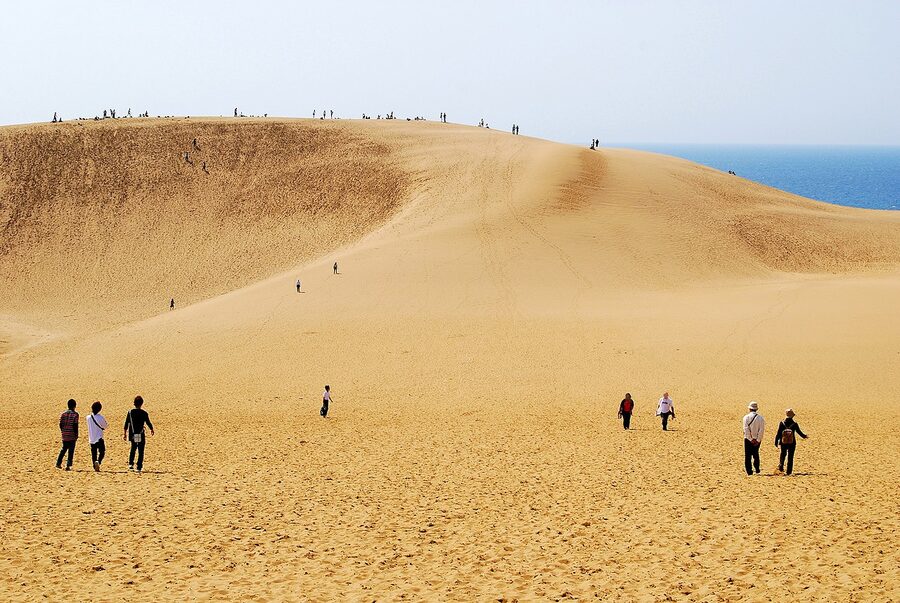
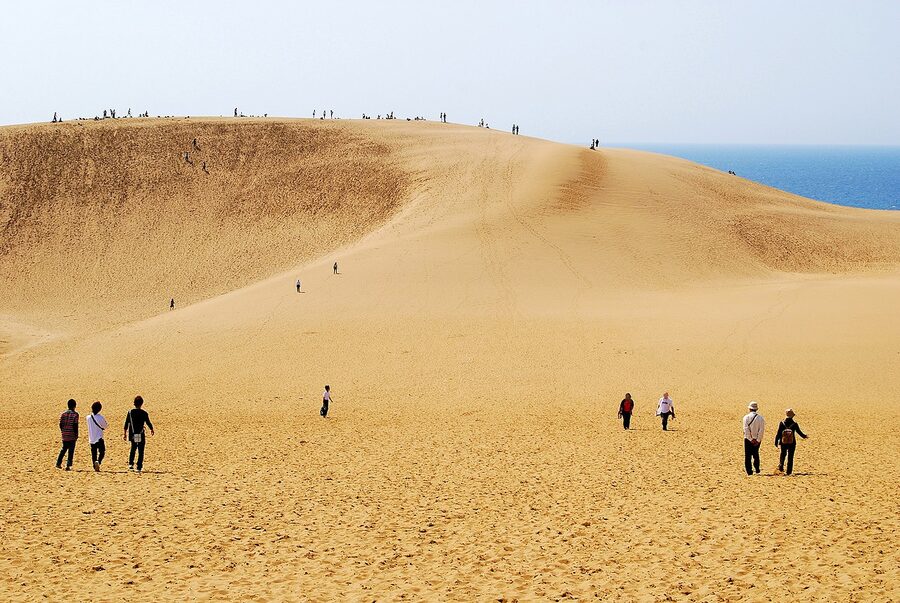
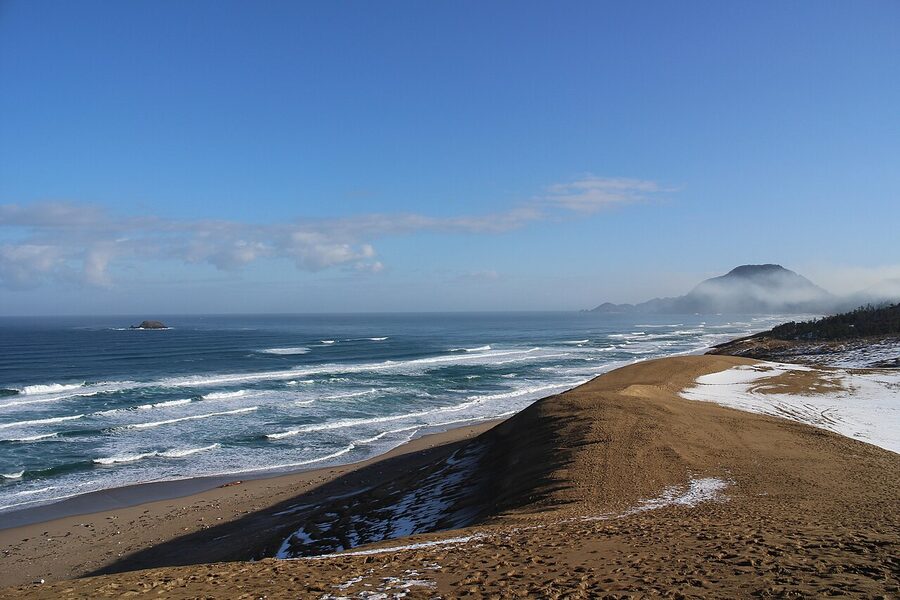
What Tottori also has, though, is the only real sand-dune landscape in Japan. Sixteen kilometres of wind-sculpted sand along the Sea of Japan coast, with dunes up to 50 metres tall, camels in summer, sandboarding in every season, a paragliding school on the ridge, a museum full of sand sculptures by international artists, and — in early mornings — the silent reshaping of the whole landscape by the overnight Sea of Japan wind. This is why people come to Tottori. Once they’re here, the rest of the prefecture is a pleasant surprise.
The Tottori Sand Dunes
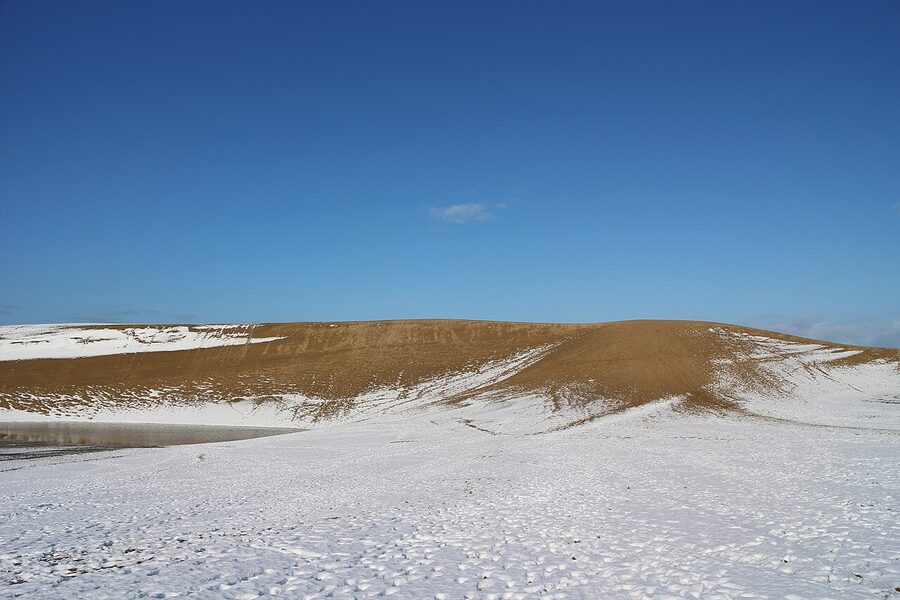
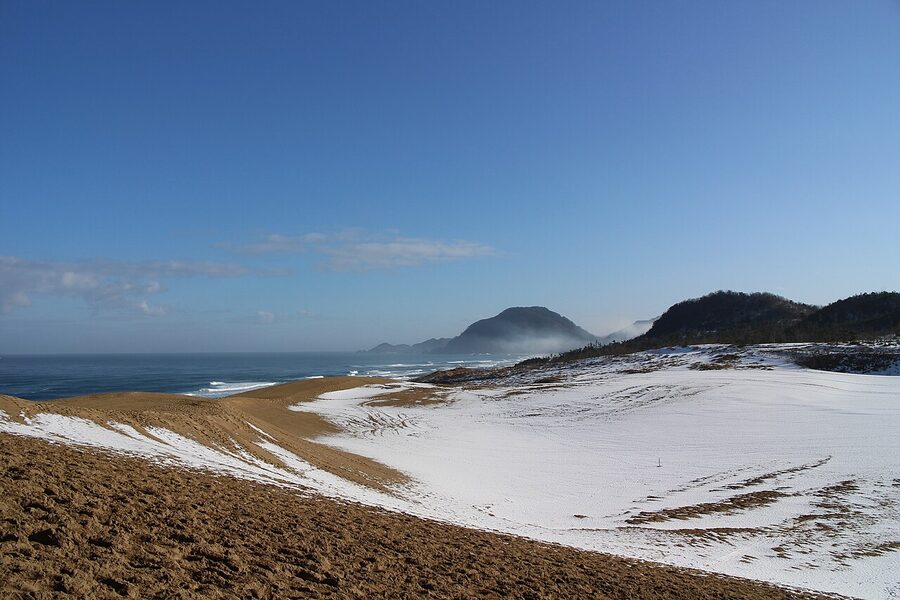
The dunes have been here for 100,000 years. The Sendai River, which drains the Chūgoku mountains 40 km inland, deposits granite silt at its Sea of Japan mouth, and the prevailing winter winds push it westward along the coast into a continuous line of dunes. The process is still going; the dunes move by 1–2 metres per year on average, and the major landscape features are reshaped dramatically by each winter storm.
The landscape is protected as a National Park and is part of the San’in Kaigan UNESCO Global Geopark. You can walk on it anywhere — there are no fenced boundaries — and there’s a specific pleasure in being one of perhaps 30 people spread across a two-square-kilometre area.
Dune activities:
Walk/climb — the default. The central ridge (called Uma-no-Se, “horse’s back”) is the highest point, about 90 metres above the parking lot, and takes 15 minutes to climb from the main entrance. From the top you can see the Sea of Japan to the north and the interior desert landscape to the south.
Camels. Yes, camels. From April to November, the Tottori-sakyu Camel Rider operation has two dromedaries named Gyu and Moso that give visitors 5-minute rides on a flat stretch near the car park. ¥1,500 per ride. Also camel photo-only for ¥100. The camels are better-treated than their Egyptian counterparts — they work 4 hours a day and have a retirement pen. Judge as you see fit.
Paragliding. The Tottori Sakyū Paragliding School on the eastern ridge offers tandem flights from ¥9,500 including instruction. Winds are most reliable in the late afternoon; morning flights are often cancelled due to instability.
Sandboarding. Tottori Sakyū Sandboard School near the car park rents boards for ¥4,000/hour with basic instruction. You slide down the 45° west face of the main dune; learning curve is about 20 minutes.
Fat bikes. Large-tyre rental bikes (¥3,000/hour) for riding across the flat sections of the dunes. Easier than it sounds; more fun than it sounds.
The Sand Museum
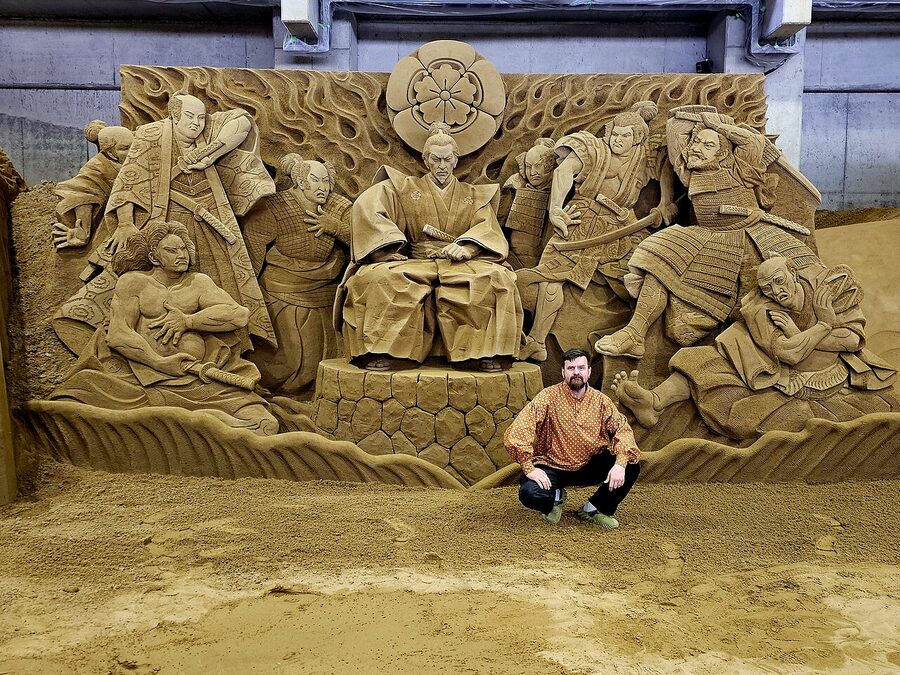
Adjacent to the dunes proper is the Tottori Sand Museum (砂の美術館, Suna no Bijutsukan) — a purpose-built exhibition hall that displays large-scale sand sculptures by international artists. Each year the museum picks a theme, invites 15–20 world-class sand sculptors from a dozen countries, and the sculptures are built over three months on site. They stay up for the annual exhibition season (April through early January) and are then returned to sand.
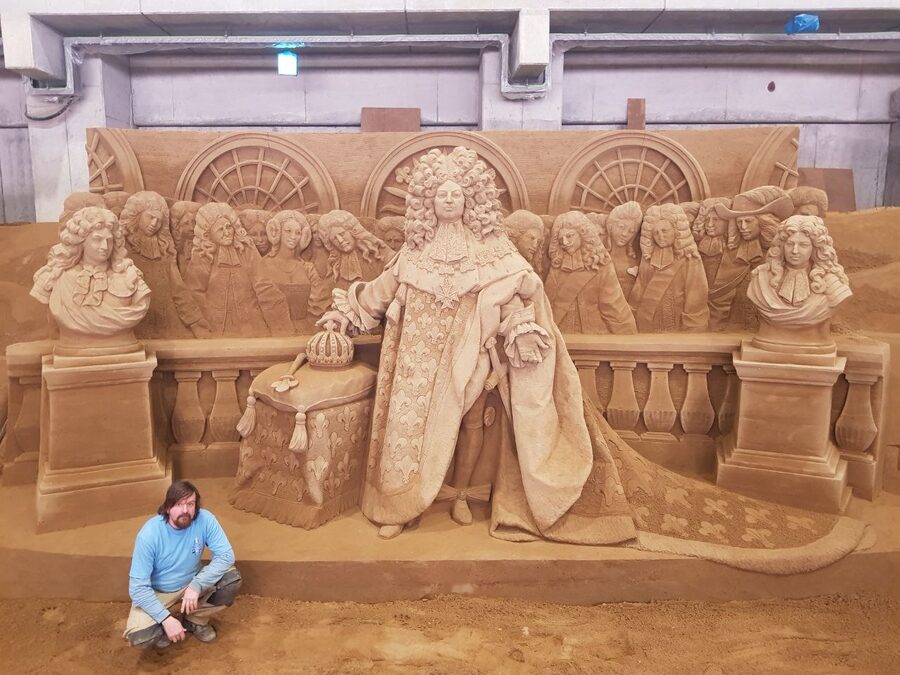
Entry ¥800. Open 09:00–18:00 during exhibition season, closed roughly January 10 through April 10 while the next year’s sculptures are being built. If you’re in Tottori during the closed season — January especially — the museum has a small permanent gallery that stays open.
Things to do on the dunes
The sand isn’t just for walking around. A handful of on-site operators run specific activities most of the year.
Camel rides. Oddly, yes. The Tottori Camel Park (らくだや) keeps six Bactrian camels at the edge of the dunes; a 15-minute camel ride across the ridge costs ¥1,500 and has been running since 1992 (a quietly successful experiment in “exotic desert-themed Japanese tourism”). Novelty value is high; the camels are well cared for.
Sandboarding. The steep north face of the main dune is the best sandboarding spot in Japan — which, granted, is a small field. Operators at the base offer rental boards and a short lesson for ¥2,500 total. Session takes about 90 minutes. Operates March through November.
Paragliding. Launch pads on the highest ridge, landing on the beach. The dunes catch consistent sea-breeze thermals that make this one of Japan’s easier learn-to-fly sites. Tandem intro flights ¥10,000–¥12,000 from the Tottori Paragliding School; allow 2-3 hours for the whole experience. Weather-dependent; operates March-November.
Fatbike tours. Electric-assist fat-tyre bikes are the newest addition — a 90-minute guided ride covers 8 km of the dunes plus the coastal pine forest, ¥5,000 per person. Good option if you don’t feel like walking in sand.
Horseback riding. A small stable near the dune entrance runs 30-minute beach rides for ¥4,000. Easier than camel riding but less photogenic.
Simple walking. Free. The official dune area is about 2 km² and takes 90 minutes to walk thoroughly. Don’t miss the “Star Dune” — the main 47-metre-tall crest — at sunset. Or sunrise, if you’re up for it; the dunes face east and the Sea-of-Japan dawn over the ridge is spectacular and almost always empty of other visitors.
Uradome coast: the “Matsushima of San’in”
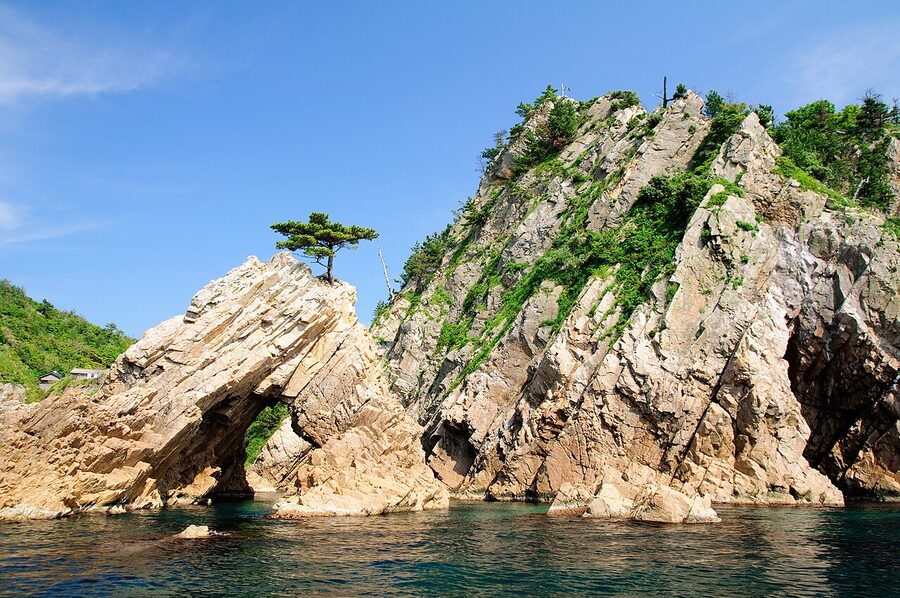
Twenty minutes east of the dunes, accessible by the Tottori-Uradome sightseeing bus (¥300) or rental car, is the Uradome coast (浦富海岸) — a 15-kilometre stretch of pine-topped rock pillars, hidden sand coves, and cliff-walking trails along the San’in coast. Designated a national “Place of Scenic Beauty” in 1928. Walking the coastal path end to end takes about three hours; you can also take a sightseeing boat from Ajiro Port that runs the full coast in 40 minutes (¥1,400).
The Uradome beach at the eastern end is one of the best swimming beaches in western Japan — clear water, white sand, rarely crowded outside Obon week. Worth a half-day. The nearby “Centennial Pine” (千年松) is a 1000-year-old black pine sitting on a rock stack just offshore; it’s a registered Natural Monument.
Tottori city
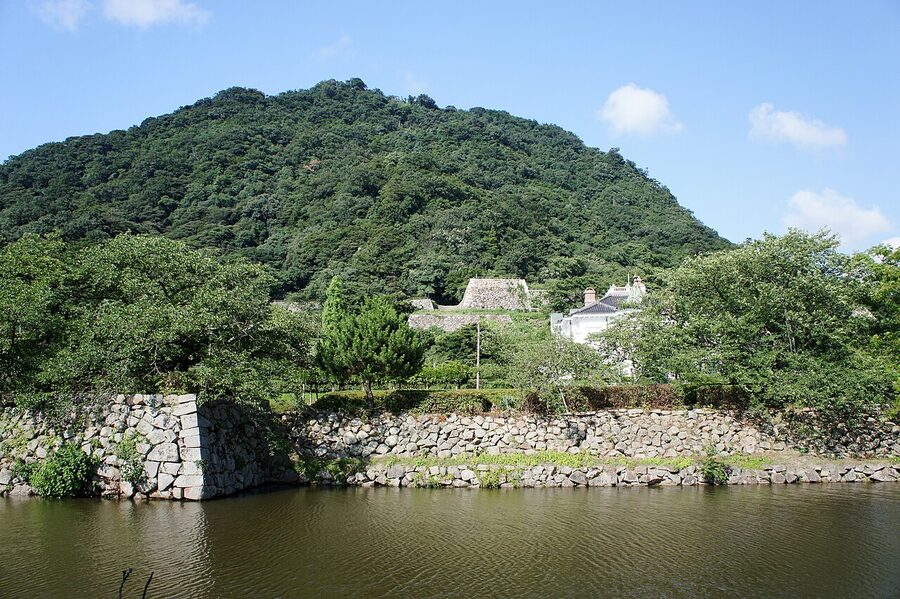
Tottori city itself is small and pleasant — 190,000 people, a 15-minute walk-radius centre, and a set of specific things worth seeing if you’re basing here for a couple of days.
Tottori Castle Ruins (鳥取城跡) are at the centre of the city, and the stone walls survive essentially intact. The walk around the ruins takes about 45 minutes. A small castle museum at the base (¥500) has a good exhibit on the 1581 siege of Tottori — one of the longest in Japanese history (200 days, the defenders eventually forced to cannibalism) — which is the castle’s darkest chapter.
Jinpūkaku is a Western-style wooden mansion built in 1907 on the castle grounds, used as the Ikeda family residence after they surrendered the castle. It’s one of the best-preserved Meiji-era Western-style buildings in Japan, and Emperor Taishō slept in it in 1907 en route to Tottori (the event is commemorated with a small plaque). ¥150 entry.
Kannon-in Temple Garden, 15 minutes north of the castle, is a small Edo-period stroll garden with an unusual tortoise-shaped pond. ¥650 entry including matcha and wagashi.
Uradome Coast
Thirty minutes east of Tottori city by bus, the Uradome Coast (浦富海岸) is a 15-km stretch of sculpted granite coastline that has been designated as one of Japan’s top three coastal landscapes alongside Matsushima and Amakusa. The water here is exceptionally clear — about 15-metre visibility in summer — and the sea caves, rock arches, and offshore islets give you the dramatic-coast experience that the dunes don’t.
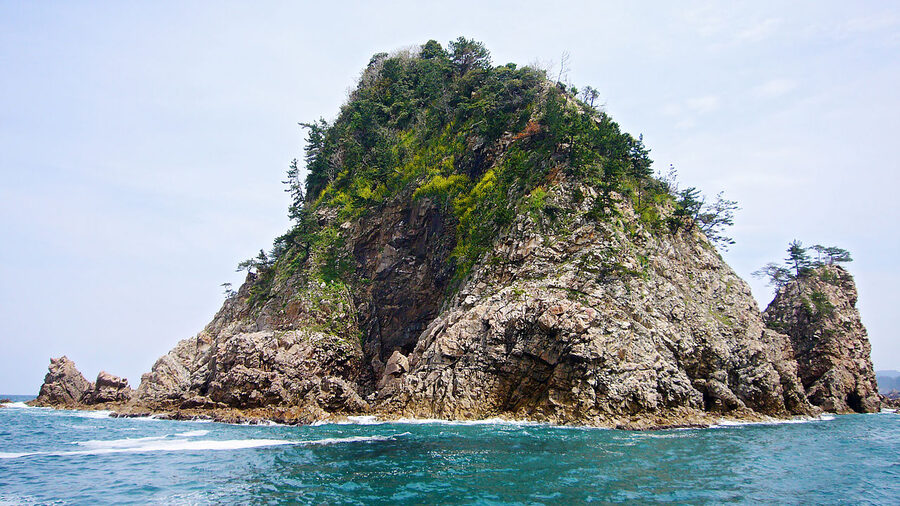
The best way to see it is the Uradome Yūrangsen sightseeing boat — a 40-minute loop from Ajiro Port for ¥1,500, running April through November. The boat takes you directly under the rock arches and into some of the sea caves. The alternative is the 3-km coastal walking trail from Shiroishijima Beach to the Yasebuto lookout — 90 minutes, flat, well-signed.
The Tottori icons nobody mentions
Tottori has leaned into two specific cultural-icon associations that you’ll see repeated across the prefecture.
Detective Conan. The manga detective Conan is based in the fictional Beika City but was created by Tottori-born manga artist Gosho Aoyama. The Gosho Aoyama Manga Factory in central Tottori (¥700 entry) is a small museum dedicated to the series. Trains on the Conan-themed line between Yurihama and Hokuei stations are painted with Conan characters; the JR station at Hokuei is literally named “Conan Station.”
GeGeGe no Kitarō. Shigeru Mizuki, creator of the classic Japanese yōkai (monster) manga GeGeGe no Kitarō, was born in Sakaiminato (Tottori’s westernmost city, on the border with Shimane). The town has a Mizuki Shigeru Road — a 1-km main street with 177 bronze statues of different yōkai characters — that runs from Sakaiminato station to the Mizuki Shigeru Memorial Museum. One of the better single-street experiences in Japan.
Food in Tottori
Nijisseiki nashi (20th-century pear). Tottori is Japan’s largest pear producer; the specific cultivar grown here is the Nijisseiki, a green-skinned Asian pear that’s sweet, crisp, and heavily floral. In-season late August to early October.
Matsuba-gani (snow crab). The winter specialty — zuwai-gani snow crabs caught in the Sea of Japan and served in Tottori ports from November to March. A full crab course runs ¥12,000+. Ryōriya Kutsurogi in central Tottori does the best mid-range version.
Tottori beef. A little-known Japanese black wagyu variety — cheaper than Kobe or Matsusaka, comparable quality. Order it yakiniku-style.
Himono (dried fish). The San’in coast is famous for small dried fish served with rice and green tea; Tottori’s himono markets are particularly good. Kagamiya in the Tottori fish market sells small gift-boxes of sampled varieties.
Getting there
By train. No Shinkansen. From Osaka/Kyoto, the Super Hakuto limited express runs Kyoto → Tottori in 2h 40min, ¥7,500. From Hiroshima, the route is via Okayama: Shinkansen to Okayama (45 min), then Yakumo to Yonago, then San’in Main Line to Tottori (total ~4 hours).
By air. Tottori Airport has 4–5 daily flights from Tokyo Haneda (70 minutes, ¥22,000). Yonago Airport (to the west) also has Tokyo and Seoul flights.
From the dunes to the city. The Kirin Lion Bus runs every 20 minutes from Tottori Station to the dunes, 20 minutes, ¥380.
Where to stay
Hotel Monarque Tottori. Reliable business-class hotel across from Tottori Station. ¥11,000–¥14,000.
Iwai Kannon Onsen Iwaiya. Traditional ryokan at Iwai Onsen, 40 minutes east of the city. ¥22,000+ with kaiseki. Best post-dune-walk soak in the prefecture.
Guest House Tottori Jinja. Budget option in central Tottori, ¥5,500 dorm, ¥9,500 private. Young operator who speaks English.
Planning your visit
Half-day. Dunes only — climb the central ridge, 20 minutes in the Sand Museum, lunch at the dune-side restaurants, back. Possible from Yonago or Matsue as a day trip.
Full day. Dunes in the morning, lunch, city + castle in afternoon, evening crab dinner if in season.
Two days. Day one city + dunes. Day two: Uradome Coast + sightseeing boat, afternoon at Mt Daisen on the return.
Pair Tottori with Daisen and Matsue for a classic 3-day San’in loop.
The moment to remember
Be on the central dune ridge at 06:30 in June. The sun has been up for 90 minutes but the dunes are still empty. The overnight wind has resurfaced the entire landscape — the ripples visible from the top are perfect, unbroken. As you walk down the western face, you are the first set of footprints on this sand. By 10:00 there will be two hundred other sets. At this moment there is exactly one. Sit. Wait fifteen minutes. The silence here is genuinely unusual for Japan — no traffic, no rail, no birds. That is the Tottori experience that the coach tours can’t buy.


