
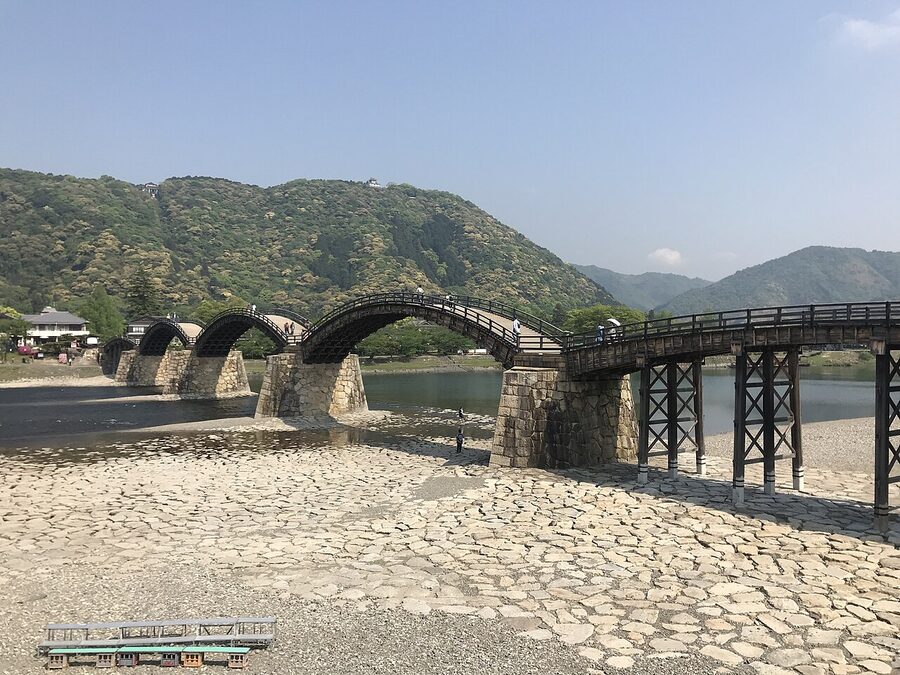
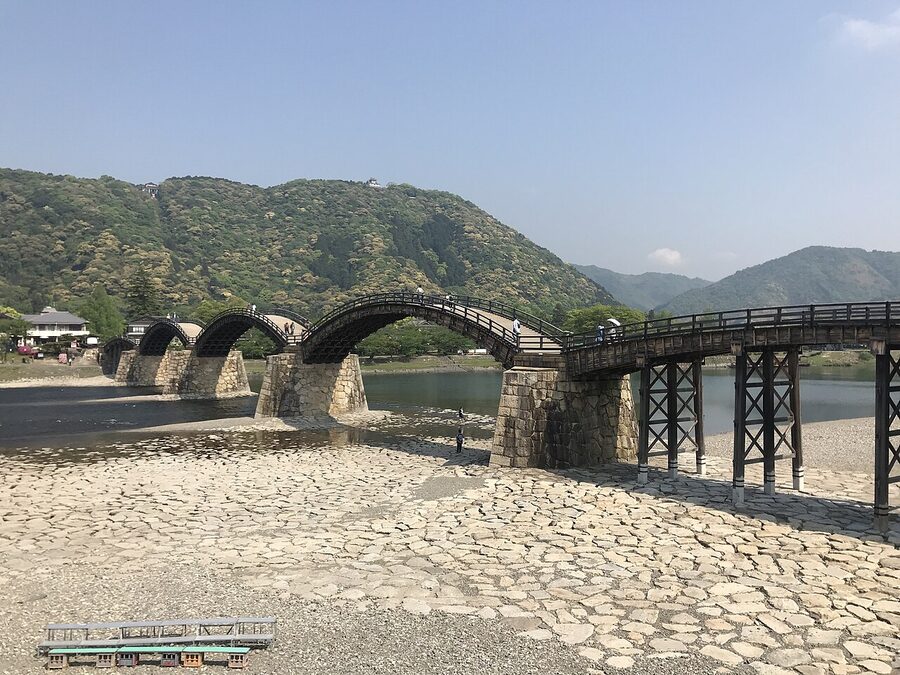
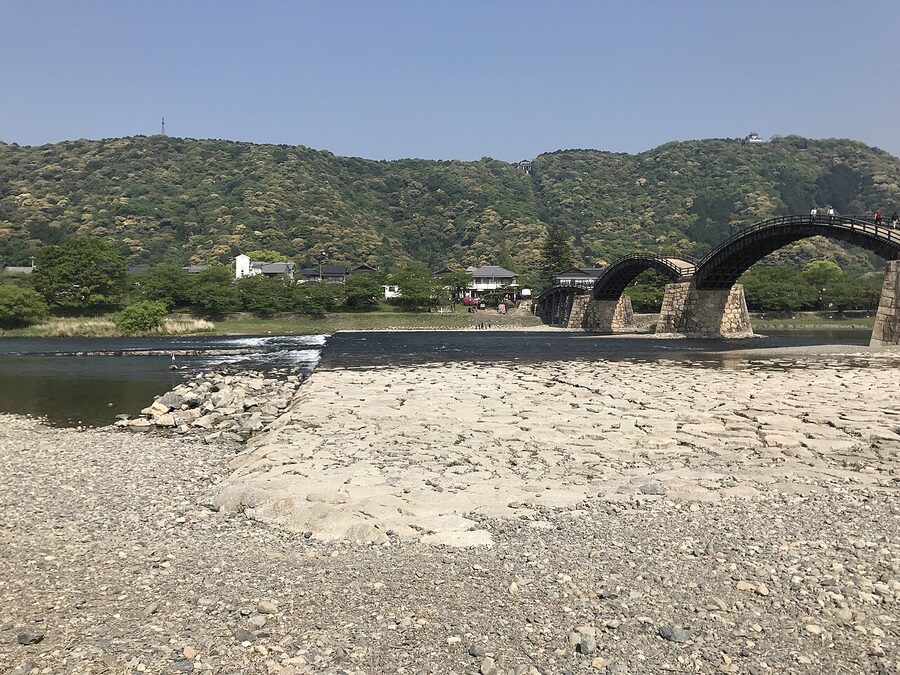
The bridge was built in 1673. It was rebuilt, after a flood, in 1950. It has been rebuilt a total of seven times in its 350-year history, and every time — exactly the same. Five wooden arches in sequence, each 35 metres across, sitting on six stone pillars that ride the Nishiki River, no metal fasteners anywhere in the timber structure, the whole thing assembled by traditional dovetail-and-wedge joinery that’s been passed down by the same three families of carpenters since the Edo period.
This is the Kintai-kyō (錦帯橋), Japan’s most famous traditional bridge and the defining landmark of the small castle town of Iwakuni (岩国) in eastern Yamaguchi prefecture. You walk over it. You pay ¥310. You get to the other side, turn around, look at it, and realise the Japanese concept of an engineering solution that is also deliberately beautiful — the word is waga-gotoku, “as if made by a god” — applies very specifically to this bridge.
Iwakuni is 40 minutes west of Hiroshima on the Sanyō local line, or 20 minutes by Shinkansen + bus. It’s an easy day trip. Here’s what to actually do.
The Kintai-kyō Bridge
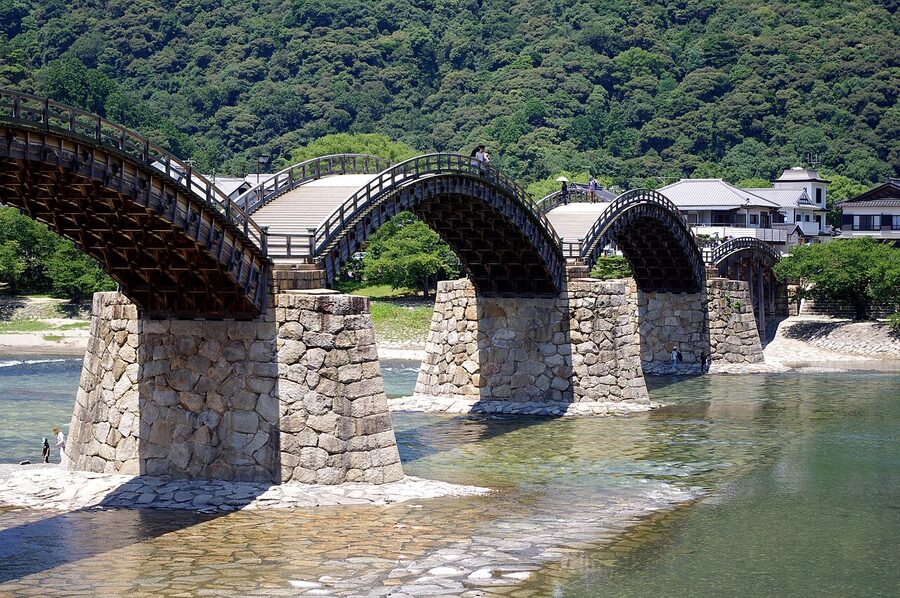
The bridge was commissioned by the third Kikkawa lord of Iwakuni, Kikkawa Hiroyoshi, in 1673. The Nishiki River at this spot has a specific problem: it floods dramatically and unpredictably, and the previous two straight bridges at the site had been washed away within years of construction. Hiroyoshi’s solution was to design a bridge that distributed the load across five separate arches anchored on massive stone piers, so that even if one arch was damaged, the others could hold while repairs happened.
The system worked — with one famous exception. In September 1950, a Typhoon Kijia flood lifted the bridge off its piers and washed it downriver in pieces. The entire bridge was reconstructed by 1953 using the original 1673 blueprint, same joinery, same materials. It was rebuilt again in 2001–2004 as a planned 280-year maintenance cycle — cedar and cypress timbers don’t last forever, and the whole structure is taken apart and rebuilt roughly every century and a half. The next rebuild is scheduled around 2140.
Cost: ¥310 per adult for a bridge-only ticket, ¥970 for a combined ticket that includes the ropeway and castle admission. The bridge is open 24 hours (there’s no gate — you just cross it), but tickets are only checked 08:00–17:00. Evening and early morning walks are effectively free.
Iwakuni Castle
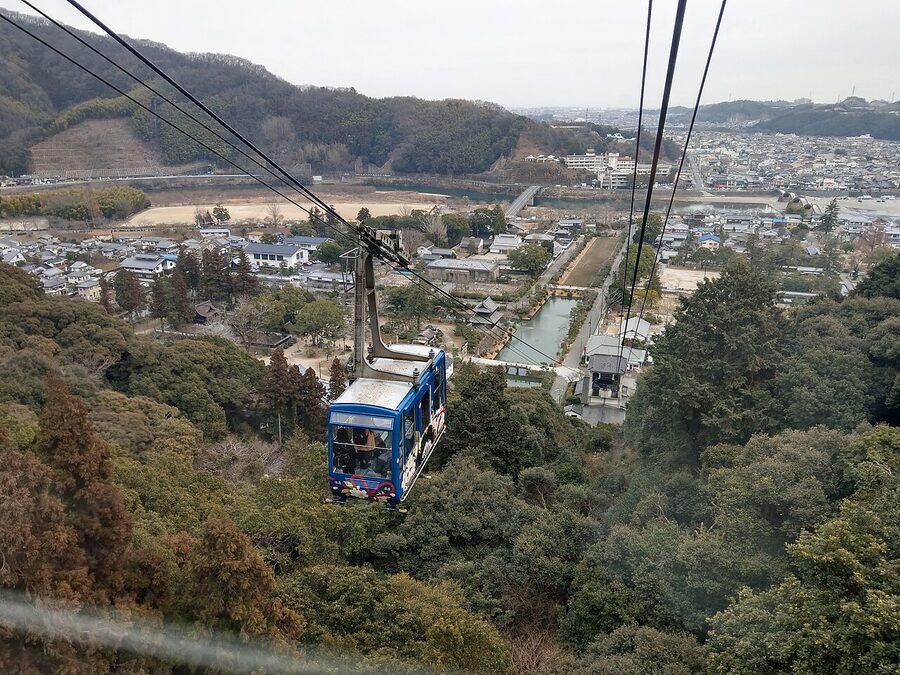
On the summit of Mt Yokoyama (200 metres), directly above the bridge’s west bank, is Iwakuni Castle (岩国城). Built in 1608, dismantled in 1615 as part of the shogunate’s one-castle-per-domain law, and reconstructed in 1962 as a concrete replica of the 1608 original. The castle has a strange geometric four-sided keep that’s quite different from the more common three- or five-sided Japanese castle designs — this design was the Kikkawa family’s architectural signature.
Inside the castle is a small museum of samurai armour (including the set that belonged to Kikkawa Hiroyoshi, who commissioned the bridge), a historical photograph exhibit, and the observation deck at the top that’s the primary reason to visit.
The white snakes
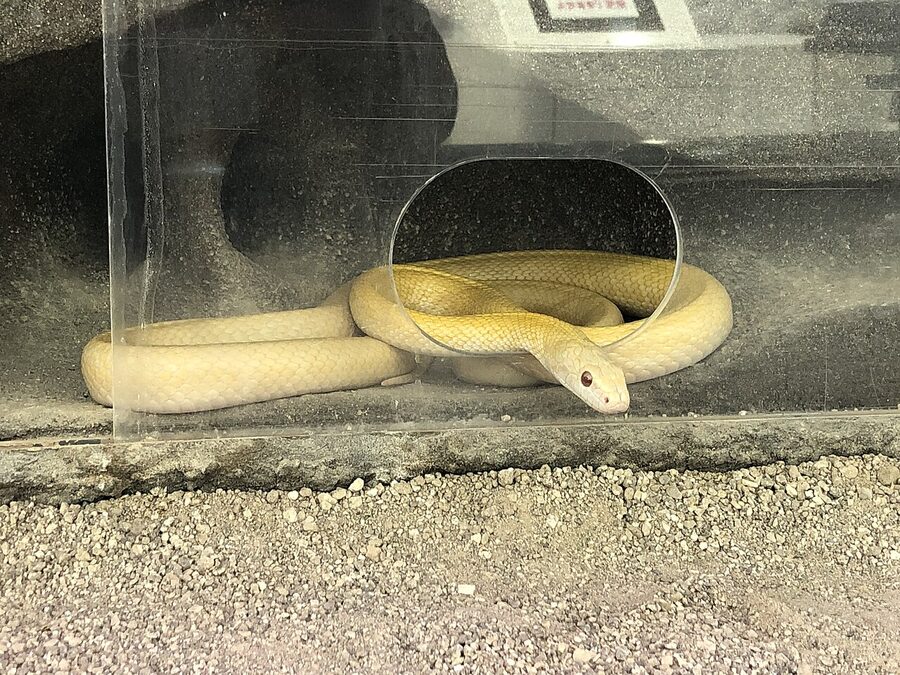
Here is the unexpected thing about Iwakuni. The town hosts a population of albino Japanese rat snakes — shirohebi — that exist in significant numbers nowhere else in the world. The snakes are pure white, between 1.5 and 2 metres long, non-venomous, and they’ve been venerated in Iwakuni as manifestations of Benzaiten (the goddess of wealth and good fortune) since at least the Edo period.
The Iwakuni White Snake Museum (岩国のシロヘビの館) on the west bank of the river houses about 100 of them in a temperature-controlled viewing environment. You can see them coiled on warming rocks, eating eggs, and basking under heat lamps. The museum also explains the genetics (the white colouration is a rare double-recessive gene fixed by centuries of isolated breeding) and the religious history.
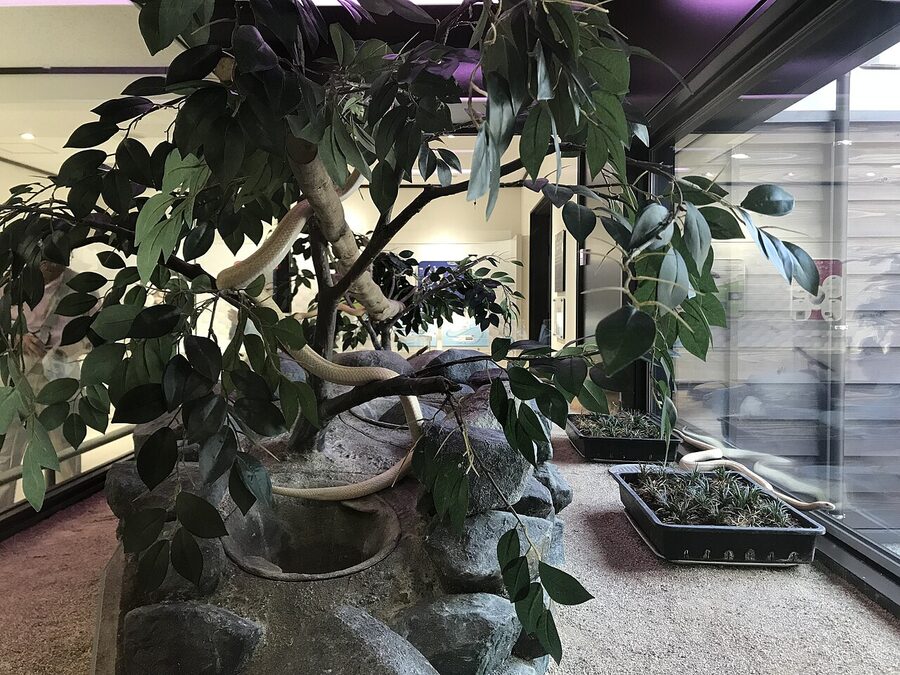
Open 09:00–17:00 year-round, ¥200 entry. Small, surprising, and completely free of tourist crowds — you will almost always be the only foreigner in the building. Plan 30 minutes.
Kikkō Park: the samurai district behind the bridge
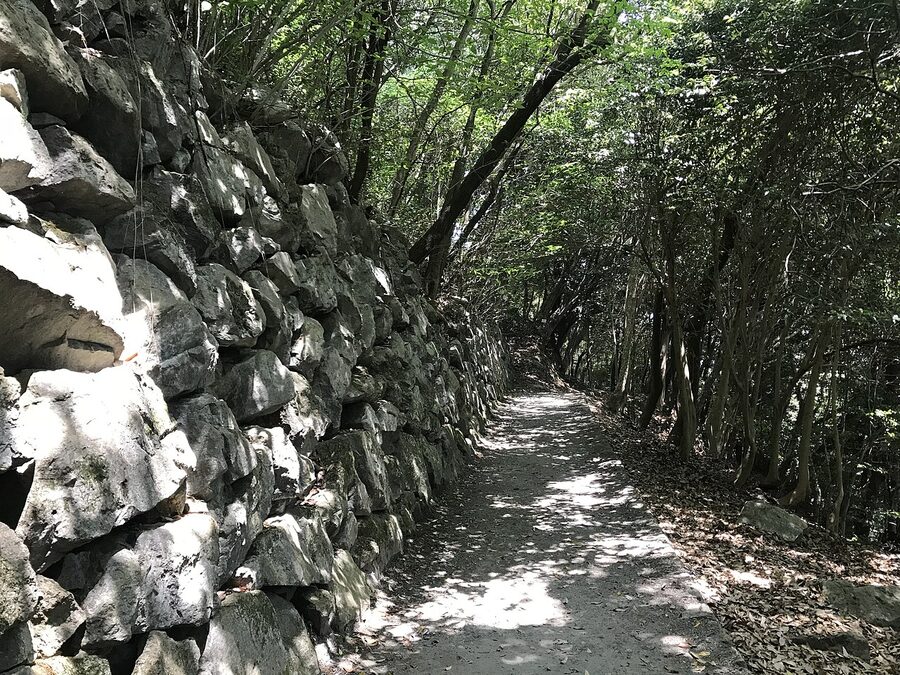
The park on the west bank of the bridge is where the Kikkawa clan’s senior retainers lived. Cross the bridge, turn left at the small shrine, and you’re walking streets that have barely changed since 1670. Three things are worth visiting inside the park.
Mekata Residence (旧目加田家住宅) — a middle-rank samurai house from 1730, restored, free entry. You take your shoes off at the door. The house is built in the traditional Iwakuni style with a slate roof (unusual — most Edo-period samurai houses used tiled roofs, but Iwakuni quarried its own slate) and has the original gyobutsu armour chest, kitchen, and reception rooms intact.
Kikkō Shrine (吉香神社) — the clan’s ancestral shrine, built 1884, honouring the first three Kikkawa lords of Iwakuni. The grounds host the annual Kikkō Festival on 5 April, a costumed samurai procession that’s one of the more photogenic festivals in Yamaguchi prefecture.
Iwakuni Historical Museum (岩国徴古館) — built in 1945 in a late-modernist concrete style that looks completely out of place among the Edo-period buildings, but which holds the core collection of Kikkawa clan documents, armour, and tea ceremony implements. ¥300 entry.
Also in the park: a rose garden with 150 varieties (bloom peak mid-May), a preserved Edo-era sake brewery (still operational on a small scale), and a statue of Sasaki Kojirō, the legendary swordsman killed by Miyamoto Musashi in 1612. Kojirō was born in Iwakuni, apparently. The statue is a popular backdrop for kendō enthusiasts on pilgrimage routes.
Nagashi-sōmen: the summer noodle tradition
From June to September, a specific Iwakuni-region eating ritual takes over the restaurants in Kikkō Park: nagashi-sōmen, literally “flowing noodles.” You sit at a long bamboo sluice that has fresh spring water running down it, and thin white sōmen noodles are tipped in at the top. You catch them with your chopsticks as they slide past, dip them in chilled tsuyu sauce, eat, repeat. Miss a noodle and it’s gone.
This is very seriously a children’s birthday activity in the Iwakuni area — the sound of bamboo sluice + running water + kids shrieking is the soundtrack of summer here. Yukodo, at the base of the Mt Yokoyama ropeway, has the most atmospheric setup: an actual trickling bamboo halfpipe that snakes 12 metres through a traditional Japanese garden. ¥1,200 for all-you-can-catch sōmen plus tempura sides. The queue can be an hour on an August Saturday; go at 11:30 or 14:30 instead.
Cormorant fishing (ukai)
From 1 June to 10 September, the Nishiki River hosts traditional ukai — cormorant fishing, where trained birds are released from a boat to catch river fish, then trained to disgorge the catch for the fisherman. The practice dates to the Nara period (8th century) in Japan and is maintained here as a live cultural demonstration.
You watch from a viewing boat (yakata-bune) launched from the dock on the east bank. The boats sail upstream from the bridge at dusk, then drift back down with the fishing boats alongside, torches burning. The cormorants dive in the torchlight; fish splash; the birds come back with ayu (sweetfish) gripped in their throats; the fisherman calls them in and squeezes the fish loose.
Tickets from the Iwakuni Tourism Office: ¥3,500 per person for the 90-minute cruise, dinner optional (+¥4,000 for a kaiseki box). Runs only on clear nights during the season; call the office the day of your visit to confirm. There is no better dinner entertainment in Western Japan in July.
What to eat in Iwakuni
Iwakuni-zushi. The town’s signature dish — a layered, pressed sushi cake. Different from the Kyoto oshizushi or the Osaka variant; Iwakuni’s version is built in wooden moulds 30 cm square, pressed overnight, and cut into diamond-shaped serving pieces. A slice is ¥800–¥1,200 at any traditional restaurant in the Kikkō Park area. Hanshin-an near the bridge is the best-known maker.
Renkon (lotus root). Iwakuni’s muddy river flats grow some of Japan’s best lotus root — crunchy, slightly sweet, used in tempura and simmered dishes. The town has had an annual Lotus Root Festival since the Meiji era.
Kikugawa sake. The Kikugawa brewery south of the bridge has been making sake since 1755 using Nishiki River water. The brewery runs tastings on weekends.
The American military base
A practical detail that almost no Japanese guidebook mentions: Iwakuni hosts a joint US Marine Corps / Japan Maritime Self-Defense Force airbase, one of the largest American military installations in western Japan. About 10,000 American military personnel and their families live in the town, which accounts for roughly 15% of the population.
You’ll notice. The bars and restaurants around Iwakuni Station (not the bridge — the station is 3 km east) have English menus, American-style burgers, and dollar-pricing signage. A handful of shops sell US military surplus. The Kintai Airport serves both commercial ANA flights and the airbase. The American presence is culturally specific to this town and is worth knowing about if you happen to end up at an Iwakuni Station bar after a long day — the crowd will be half Marines.
This isn’t why you come to Iwakuni; the bridge and castle are. But if you have an evening spare, the “American village” area around the airbase is an unusual corner of Japanese-American cultural overlap not replicated anywhere else in the Chūgoku region.
Seasonal guide
Spring (late March – April). Cherry blossom season in Kikkō Park. Probably the most crowded and most photographed window of the year; arrive by 08:00 or come at 18:00 for the evening illumination.
Early summer (May – June). The rose garden in Kikkō Park blooms. Cormorant fishing starts 1 June. Nagashi-sōmen restaurants open around 1 June. Lotus flowers bloom on the riverside flats late June.
High summer (July – August). Hottest, humidest, busiest with domestic tourists. The evening bridge illumination, the cormorant boats, and nagashi-sōmen meals make this the best season to experience Iwakuni at its traditional rhythm, despite the heat.
Autumn (October – November). Kikkō Park’s maples turn. The castle observation deck is at its clearest for long-range Setouchi views. Late October is also the Iwakuni Matsuri, a smaller festival with street food and taiko drumming on the bridge’s east approach.
Winter (December – February). Quiet. Occasionally snowy — the bridge with its five arches dusted in snow is one of the rarer photographs in the Japanese bridge-iconography canon, maybe three or four days a year. The ropeway runs year-round.
Getting there
From Hiroshima. JR Sanyō local line to Iwakuni Station, 45 minutes, ¥770. Then the municipal bus to Kintaikyō-mae, 15 minutes, ¥300.
From Shin-Iwakuni Station (Shinkansen). Kodama and Sakura stop here. Shin-Iwakuni is 25 minutes west of Hiroshima on the Shinkansen. From Shin-Iwakuni, a shuttle bus runs to the bridge in about 15 minutes.
From Hiroshima Airport. Airport bus to Iwakuni Kintaikyō Airport (confusingly named) — about 90 minutes. Or airport bus to Hiroshima Station and then train from there.
Where to stay
Most people day-trip Iwakuni from Hiroshima. If you want to overnight:
Iwakuni Kokusai Kanko Hotel. Older traditional hotel directly overlooking the bridge — the view from a riverfront room is as good as it gets. ¥15,000–¥22,000 per person.
Kintaikyo Kankō Hotel Sekitei. Riverside ryokan with hot spring baths, a small garden, and a traditional kaiseki dinner. ¥25,000+.
Planning your visit
Half-day. The classic Iwakuni visit. Train from Hiroshima → bus to bridge → cross the bridge → ropeway up to the castle → back down → white snake museum → lunch of Iwakuni-zushi → return. 4 hours total.
Full day. Above plus an afternoon at Kikkō Park (walking, the samurai residences that survive there, and the rose garden), dinner with a Kikugawa sake tasting, evening Shinkansen back.
Pair with Hagi for a broader Yamaguchi trip — Iwakuni is 90 minutes south-east by train and makes the obvious first stop on a Hagi → Chōshū-coast loop.
The best moment
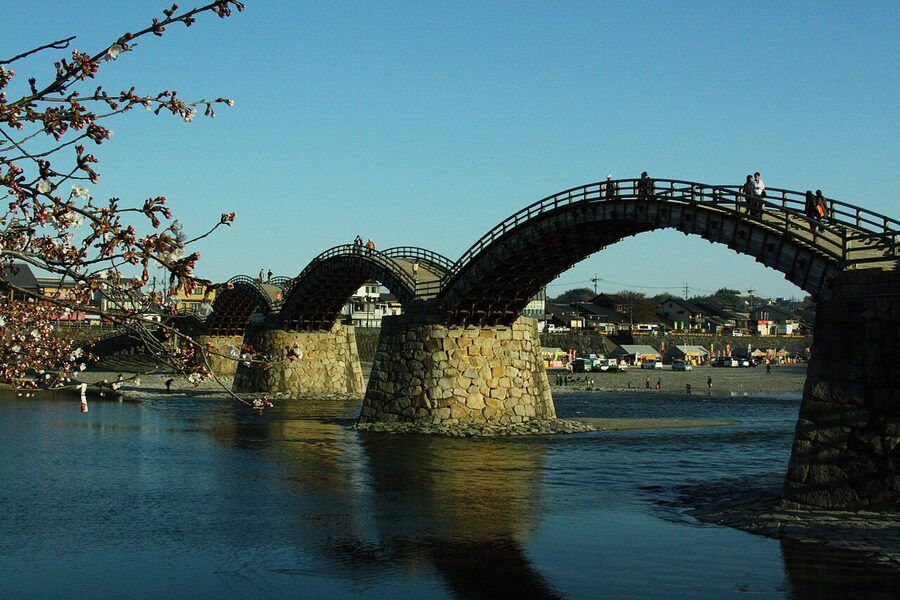
Walk the bridge twice: once at 08:00 before the ticket booth opens (free, quiet, local commuters crossing to get to work on the west bank), and once at 18:30 as the evening illumination kicks in and the bridge’s five arches get softly uplit from below. Stand on the middle of the third arch and look north up the Nishiki River. On a clear evening in April, with cherry blossoms on both banks and the castle silhouette above, you will understand why this bridge has been rebuilt seven times. It’s worth the effort, every time.


