
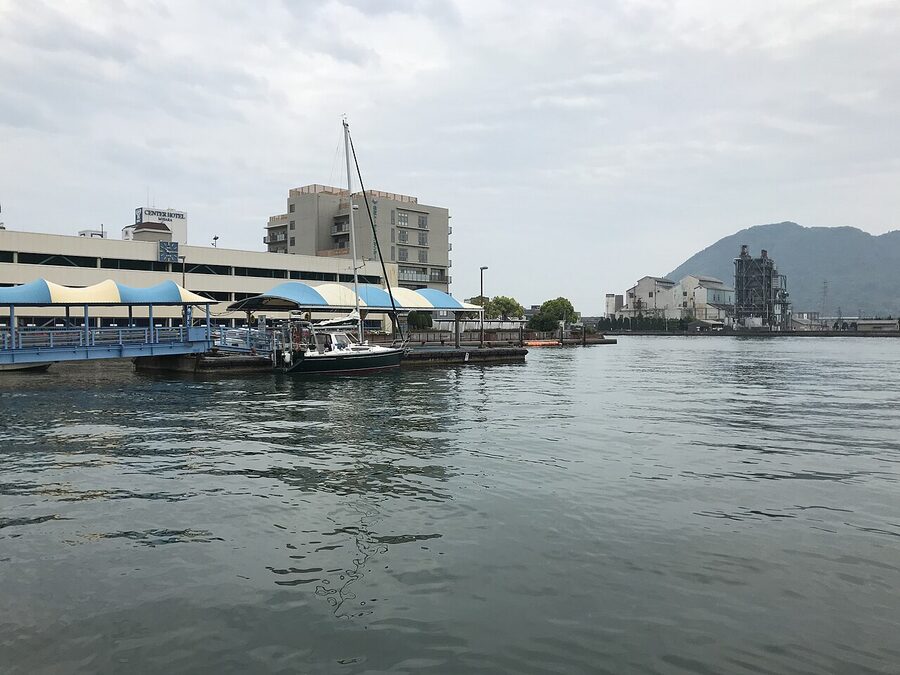
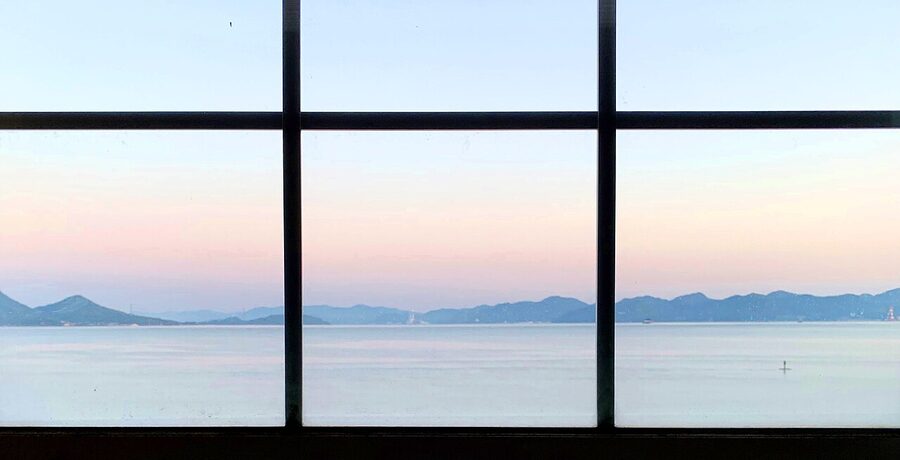
Western Japan — Nishi Nihon, properly — is the quiet end of the country. It’s where the train slows down, the coach tours thin out, and the castle towns start keeping their shutters open past 4 pm. This site is a guide to the five prefectures of the Chūgoku region: Hiroshima, Okayama, Shimane, Tottori, and Yamaguchi, plus the Seto Inland Sea islands that belong to them. Umi, yama, sora. Sea, mountains, sky.
Start here
Three long-form town guides, each an image-led walk through a specific place: the transport, the food, where to stay, and what to actually do once you’re there.
Mihara: The Castle Town That Sits on the Sea
A floating castle built on three bay islands in 1567, a Shinkansen platform wedged inside the keep, a ferry service to the rabbit island, a daruma-doll capital, and the best izakaya grid most people on the Kodama line have never walked through. Read the full Mihara guide →
Izumo Taisha: Japan’s Other Grand Shrine, and the Town That Holds It
The shrine where all of Japan’s gods reconvene for a week every October, the archaeological proof that the original hall may have been 48 metres tall, Izumo soba, the Kaguraden’s 5-tonne rope, and the quiet Hinomisaki lighthouse that almost no one bothers with. Read the full Izumo guide →
Kurashiki: The Canal Town That Collected Monet
Willow-lined canals, white-walled Edo warehouses, Japan’s first Western-art museum (with a real Monet, a real El Greco), the cotton-mill red-brick that powered all of it, and Kojima Jeans Street twenty minutes south. Read the full Kurashiki guide →
Destinations by prefecture
The Chūgoku region has five prefectures, each with its own grain. Here’s how we group them.
Hiroshima prefecture
The most-visited of the Chūgoku prefectures and the one most travellers stop at — rightly — for the Peace Memorial and Miyajima. But Hiroshima is also castle towns, ferry ports, and the Setouchi oyster belt.
- Mihara — castle town, ferry hub for the northern Setouchi islands
- Fukuyama — the eastern gateway, castle beside the Shinkansen station
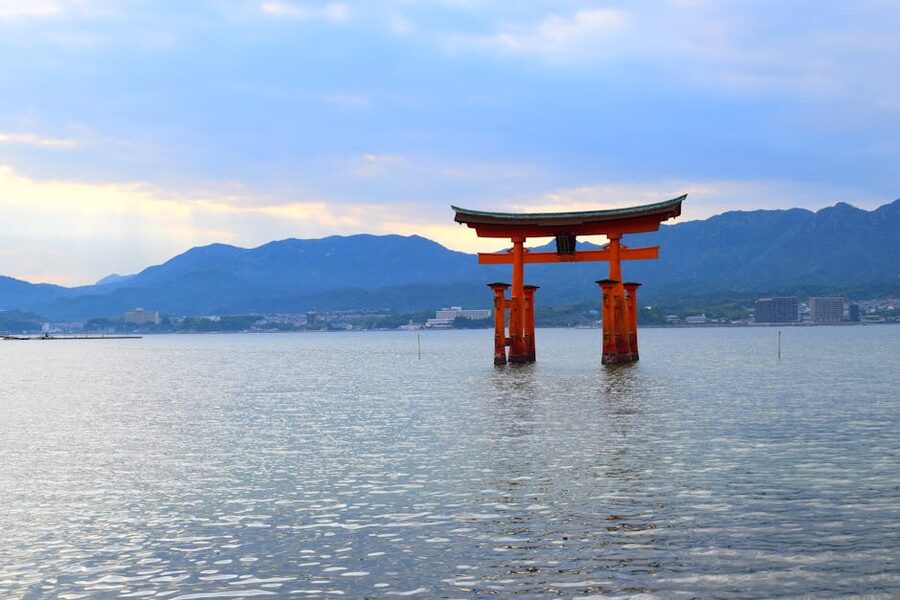
- Miyajima — Itsukushima Shrine and the floating torii
- Setouchi oysters — where they come from and how to eat them
Okayama prefecture
The “sunshine country” — statistically Japan’s driest prefecture, and home to the white peach, Momotarō, denim, and some of the best-preserved merchant and castle towns in the country.
- Kurashiki — Bikan canal quarter, Ohara Museum, Kojima denim
- Okayama city and Kōrakuen — one of Japan’s top three gardens, the Black Crow castle
- Tsuyama — inland castle town with the best cherry-blossom grounds in Chūgoku
- Osafune — the sword-making village the samurai came to for their blades
Shimane prefecture
The San’in coast — the “shadow side” of Honshū, facing the Japan Sea, cloudier and quieter than anywhere on the Pacific side. This is the old country.
- Izumo — Izumo Taisha, the month of the gods, Inasa Beach
- Matsue — castle town, Lake Shinji sunsets, Lafcadio Hearn’s house
- Oki Islands — a UNESCO Global Geopark four hours offshore
Tottori prefecture
The smallest prefecture in Japan by population, famous for sand dunes, Mt Daisen, and pears the size of tennis balls.
- Tottori city and dunes
- Yonago — castle town, Mizuki Shigeru’s hometown
- Mount Daisen — the Fuji of the San’in, ski resort and temple complex
Yamaguchi prefecture
The western tip of Honshū, where samurai modernisation began in the 1860s and where the Shinkansen runs out of western Honshū before the Kanmon tunnel to Kyūshū.
- Yamaguchi city
- Hagi — samurai town, the quieter Meiji Restoration birthplace
- Iwakuni — Kintai-kyō wooden bridge, white snake shrine
- Yanai — white-walled merchant town, goldfish lanterns
Browse by theme
Every place on this site also fits into a theme — samurai towns, shrines, islands, food, landscape. If you know what kind of trip you’re taking, the theme index is faster than the prefecture one.
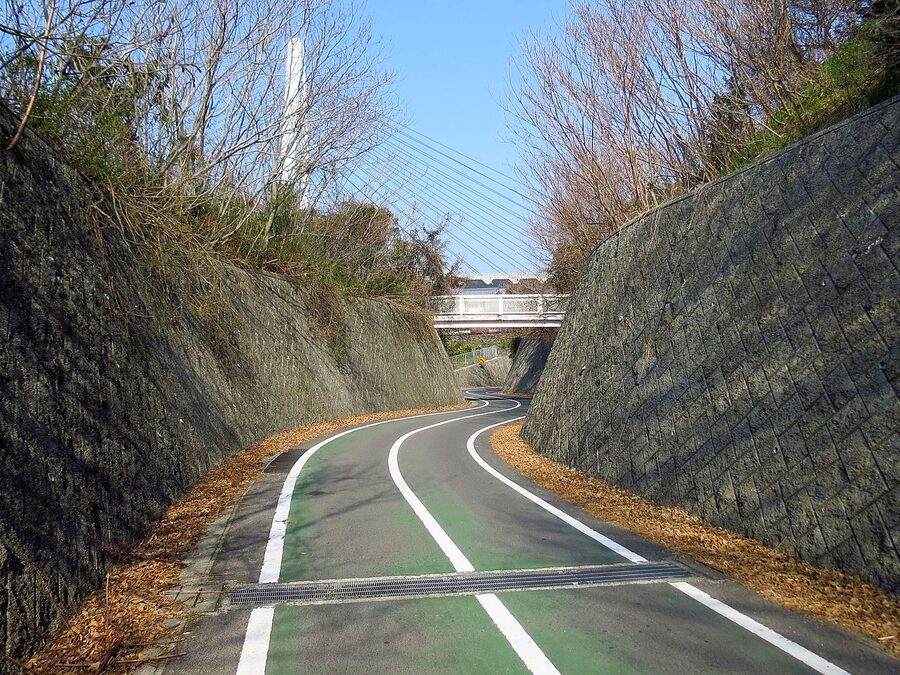
- Landscapes of Western Japan — the mountains, coasts and islands of the Chūgoku region
- Travel by theme — overview of everything grouped by topic
- All theme pages — the full list
- All destinations — the full list of cities covered
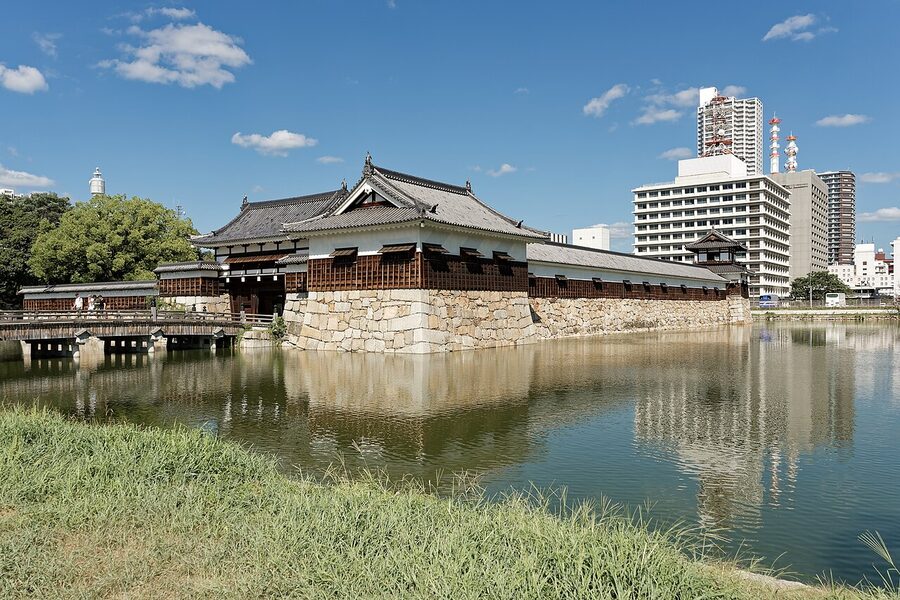
Why Western Japan?
Because when somebody tells you they’ve “done Japan” after a Kyoto-Tokyo-Osaka week, they’ve done about a third of the interesting country. The west is what they missed. The castle towns that didn’t get firebombed. The islands with year-round rabbits and wartime poison-gas ruins side by side. The small shrines that are older than most European cathedrals. The Shinkansen hops that cost ¥3,500 and get you to entire regions of Japan nobody on your Instagram feed has ever been to.
The Setouchi — the Seto Inland Sea — is the thread through most of it. Sheltered water, two thousand islands, ferry lines that haven’t changed since the 1960s, oyster rafts, cycling routes, and a specific slower pace. Any of the towns in the destinations list above can be a base for a Setouchi trip. Start with whichever one you can fly or shinkansen to.
New guides are being added every week. If there’s a specific town or island you’re trying to plan for that isn’t listed yet, email us (the contact link is in the footer) and we’ll prioritise it.
The guided days worth their ferry fare.
Alongside the destination guides, we review the region’s bookable days: Miyajima crossings timed to the tide, Peace Memorial walks led with care, sake in Saijo’s brewery quarter. Each review carries the price, the schedule and a plain verdict.
 ★ 5.0Most bookedPeaceful Hiroshima & Miyajima UNESCO 1 Day Bus TourFrom $129
 ★ 4.9Hiroshima: Hiroshima and Miyajima UNESCO Sites 1-Day TourFrom $1228 hours
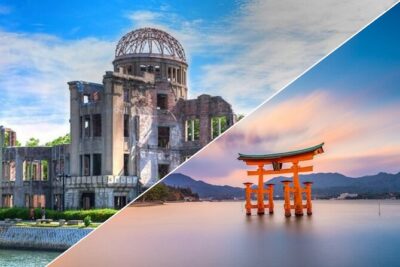 ★ 5.0Hiroshima / Miyajima Full-day Private Tour with Government Licensed GuideFrom $202
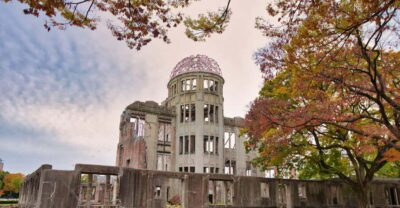 ★ 4.7Osaka/Kyoto: Hiroshima Miyajima Bus Tour & Shinkansen TicketFrom $27712 hours
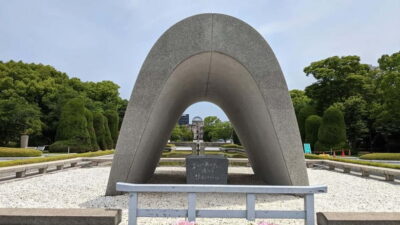 ★ 4.8Hiroshima Historical Walking Tour – Why A-Bomb was DroppedFrom $352h 30m
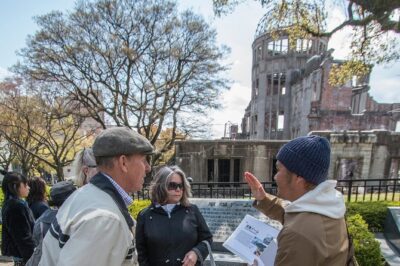 ★ 5.0Hiroshima Peace (Heiwa) Walking Tour at World Heritage SitesFrom $94

